Skip to content
Patrick Crowley

Chumby

A Wi-Fi gadget the size of a clock radio that ran internet widgets on a little touchscreen.
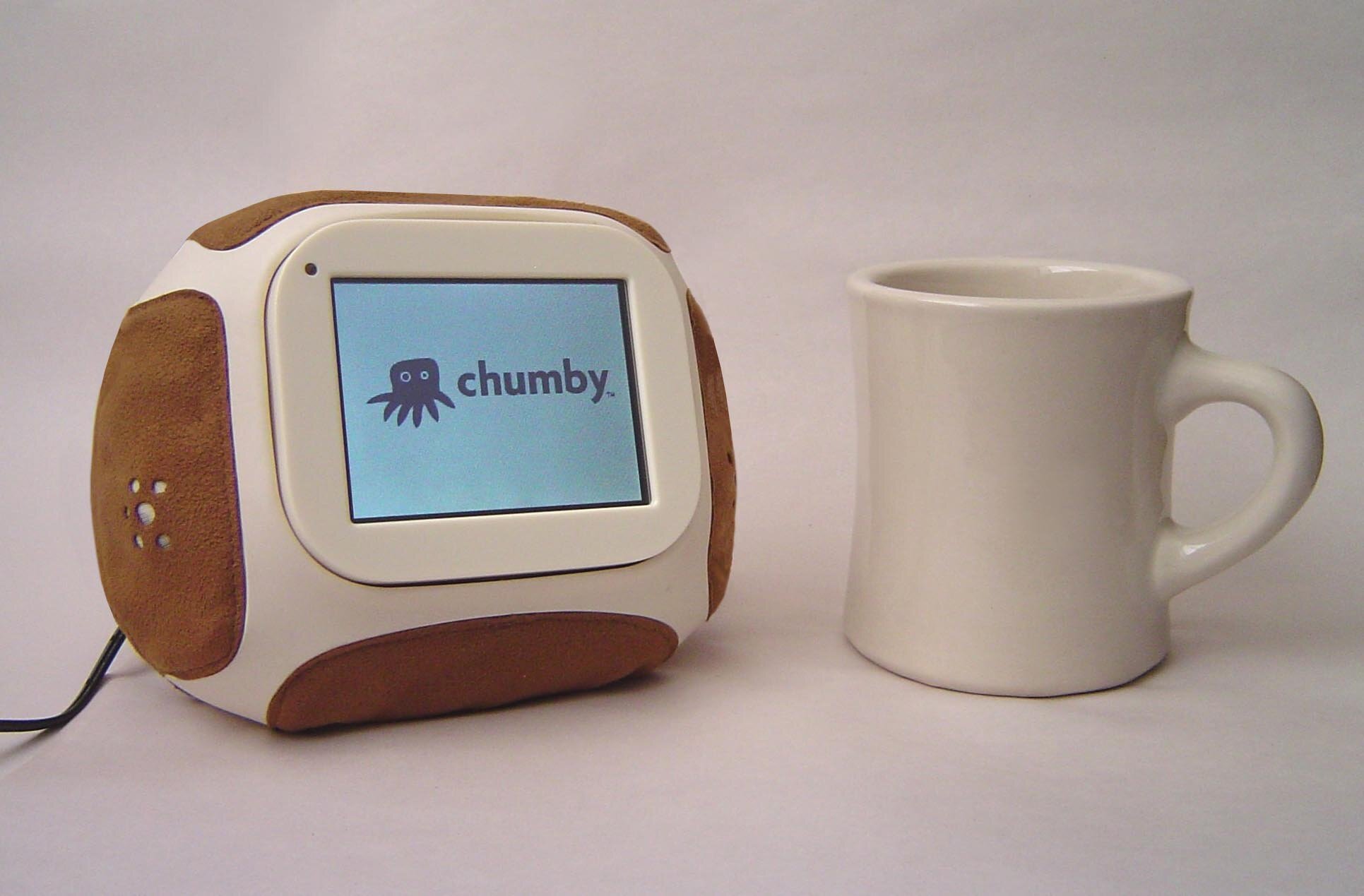
An original Chumby in its tan leather case, showing the Chumby logo on its screen, next to a white coffee mug

The Chumby was a Wi-Fi gadget about the size of a clock radio, with a small touchscreen in a soft leather-and-plastic case. It ran a rotating set of internet widgets, and it was built to be hacked: its software was mostly open source, and anyone could download the hardware schematics. Wired named it one of its top gadgets of 2008.

I worked on the Chumby website, which was both the public marketing site for Chumby and the backend service used by every device. Users could create an account, activate their Chumby, get the latest software, and customize their widgets.

Chumby was a truly unique piece of hardware. But on June 29, 2007, everything changed when the very first iPhone was released, and Chumby never quite found its footing after that. Why buy a widget player for your nightstand when the whole internet can now fit in your pocket?

I also really enjoyed working with legendary designer Susan Kare, who designed Chumby’s identity, icons, and website. She was a hero of mine from her incredible work on the Macintosh.

Photo from bunniestudios.com.

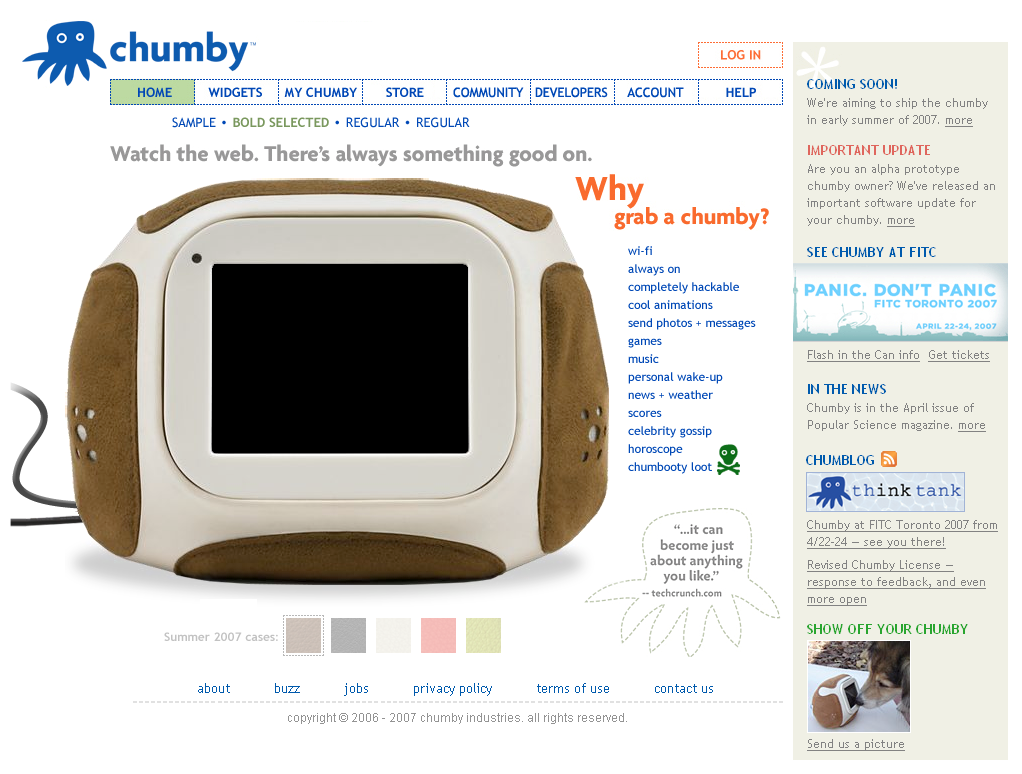
The Chumby home page in 2007, with a large photo of a Chumby in a brown leather case, a list of reasons to grab one, a row of summer 2007 case colors, and news in a sidebar
The Chumby home page in 2007, a few months before it shipped.
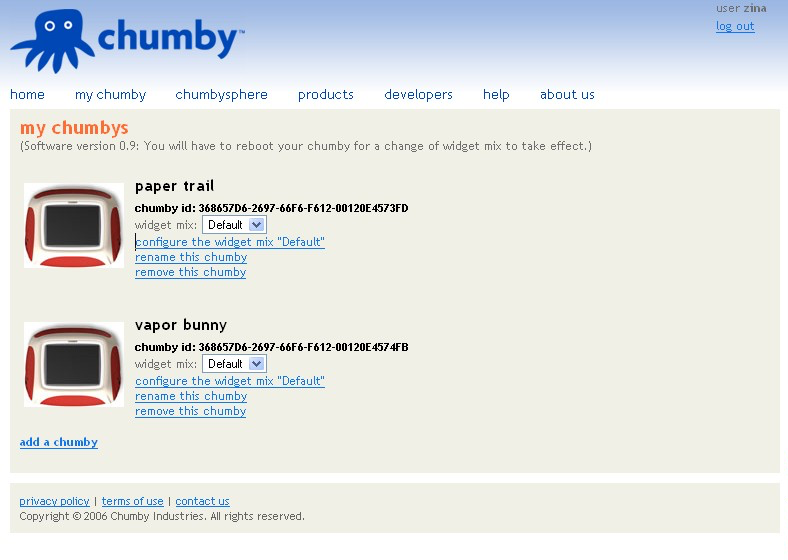
The “my chumbys” page in 2006, listing two Chumbys, paper trail and vapor bunny, each with its ID, a widget mix menu, and links to configure, rename, or remove it
You could rename your Chumbys and pick a widget mix for each one (as seen in the 2006 alpha).
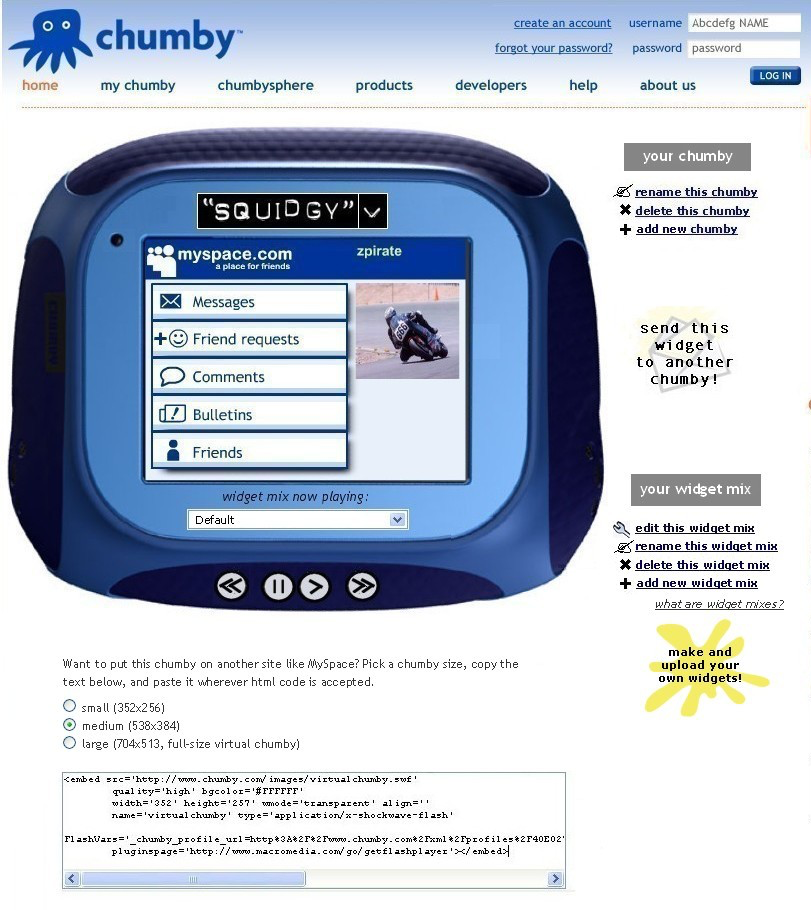
A My Chumby page with a blue virtual Chumby playing a MySpace widget, controls to rename the Chumby and edit its widget mix, and embed code for putting it on another site
Because Chumby widgets were web-based, you could embed your personalized widget mix on sites like MySpace.
The power supply sheet of the original Chumby’s schematics, code-named Ironforge, with its 3.3V, 5V, and 1.8V regulators, engineers’ notes, and “Not at all confidential” in the corner, dated August 20, 2007
Schematics for the original Chumby. Pages were marked “Not at all confidential.”
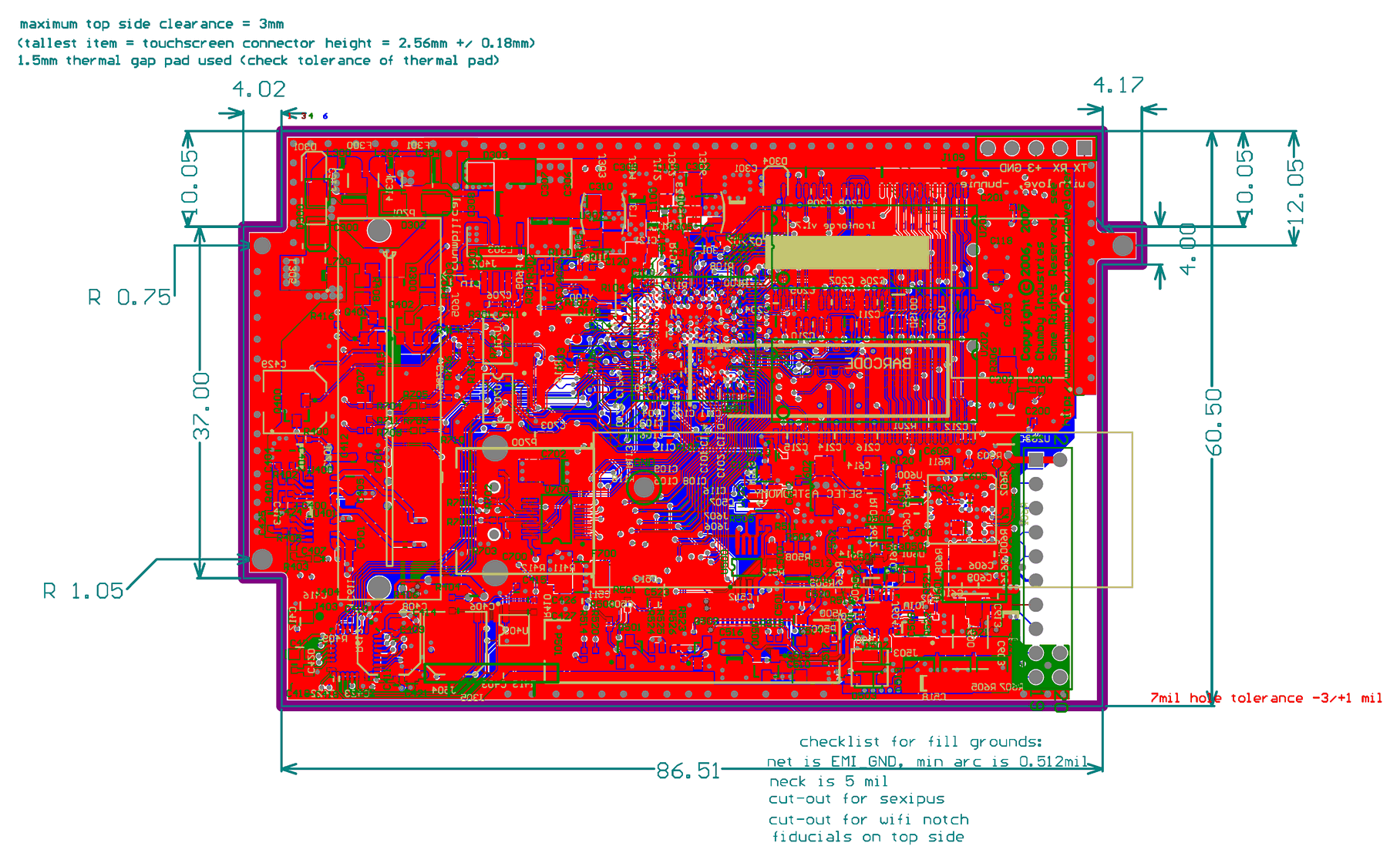
The layout of the original Chumby’s circuit board in red, blue, and green layers, with its measurements, a checklist of notes, and “-bunnie- with love” in the silkscreen
The board layout, signed “with love” by Andrew “bunnie” Huang, Chumby’s lead hardware engineer.